Formentor Lighthouse Mallorca: How to Get There and What to See in 2026
The Formentor Lighthouse stands at the tip of the Formentor Peninsula, on cliffs nearly 200 metres above the Mediterranean. In service since 1863, it marks the end of the most spectacular road in northern Mallorca.
At the tip of the Formentor Peninsula stands a lighthouse that has been in service since 1863. The Formentor Lighthouse rises 210 metres above sea level, making it the lighthouse with the highest focal height in the Balearics. From land, access is via a narrow road with traffic restrictions in high season.
The view from the sea is very different. The white tower looks small atop a vast wall of rock that drops almost vertically into the Mediterranean. Our boat trips pass in front of the lighthouse, giving you a single view of the tower, the cliffs and the tip of the peninsula from a perspective the road cannot offer.
Where it is
The lighthouse stands at the tip of Cap de Formentor, in the municipality of Pollença.
Coordinates: 39°57'39.8" N, 3°12'41.8" E (approx.)
| Port de Pollença | ~19 km by road | ~5.6 nautical miles by sea |
| Port d'Alcúdia | ~35 km by road | ~8.8 nautical miles by sea |
| Can Picafort | ~43 km by road | ~10.8 nautical miles by sea |
Road distances depend on the traffic restrictions on the Ma-2210 (see the Restrictions section).
Quick facts
| Official name | Formentor Lighthouse |
| Municipality | Pollença |
| Year built | 1863 (inaugurated on 30 April 1863) |
| Tower height | 22 m (white tower attached to keepers' dwellings) |
| Focal height | 210 m above sea level |
| Nominal range | 24 nautical miles |
| Light characteristic | Group of 4 flashes every 20 s |
| Daytime appearance | White cylindrical tower with dwelling building |
| Status | Operational (automated, solar-powered) |
| Access | Ma-2210 road (with restrictions; see below) or boat trip |
| Open to visitors inside | No (the former dwellings have been converted into a café) |
| Heritage protection | Tramuntana Mountains, UNESCO World Heritage |
Is this lighthouse worth visiting?
Yes, if you want panoramic views over the bays of Pollença and Alcúdia and the peninsula's cliffs. On clear days, you can make out Menorca from here. It is also worthwhile if you enjoy scenic drives: the Ma-2210 has tight bends and viewpoints such as Es Colomer that are worth a stop. The working lighthouse, dating from 1863, also has a remarkable construction history.
It is less suitable if you expect to go inside the tower: it is not open to the public, although the keepers' dwellings house a small café. The same applies if you would rather not deal with traffic restrictions and buses in high season.
History and context
The project was entrusted to the engineer Emili Pou. Construction began in 1857 and was especially difficult: a 20 km track had to be cut from Cala Murta across very steep terrain. The labourers worked even on Sundays; the bishop ordered an altar to be built so they could hear Mass before starting their shift. The lighthouse was inaugurated on 30 April 1863 with a rotating catadioptric lens of 12 panels.
In 1927 a new optic with a mercury bath was installed. In 1971 the lantern and optic were replaced with more modern systems. Since the 1970s it has run on electric generators and, later, solar panels.
With a focal height of 210 metres, it is the lighthouse with the highest focal plane in the Balearics. The former keepers' dwellings have been converted into a café.
Restrictions and permits
The Ma-2210 road has traffic restrictions to protect the surroundings. The rules for 2026:
Restricted period: 15 May to 15 October.
Restricted hours: 10:00 to 22:00. Outside these hours the road is open.
Zone 1 (km 0 – 8.7): access allowed until the beach car park fills up; the barrier then closes.
Zone 2 (km 8.7 – 19.6): fully closed to private vehicles between 10:00 and 22:00.
Fines: DGT cameras monitor access; 100 to 200 euros for entering without authorisation.
To visit the lighthouse in high season without fines: take the TIB 334 bus, which connects Alcúdia and Port de Pollença with Formentor beach and the lighthouse. The journey from Port de Pollença takes about 50 minutes. Cash payments are not accepted: bring a bank card or a Targeta Intermodal.
Outside the restricted period you can drive there in a private car. The road is narrow and winding. It is worth setting off early (before 9:30) to avoid congestion.
How to see or visit it
From land
Arriving by car is possible outside the restricted hours (before 10:00 or after 22:00) or outside the regulated season. From Port de Pollença take the Ma-2210, with viewpoints such as Es Colomer and Costa Roja. There is a small car park next to the lighthouse that fills up early in high season.
From the car park, a paved path of a few metres leads to the keepers' dwellings, with a café and toilets. The tower cannot be visited. Bring comfortable footwear, water and sun protection: there is little shade.
From the sea
If you prefer to avoid the traffic restrictions, parking and bus travel during high season, seeing it from the sea is a convenient alternative that also offers a completely different perspective.
Our Boat Trip to Formentor departs from the Port of Alcúdia and sails along the Aucanada coast and Coll Baix beach. During the trip there is a swimming stop in remarkably clear water, when sea conditions allow.
The voyage continues past Cap Pinar until reaching Formentor Beach, with roughly an hour of free time on the beach. The boat then rounds the peninsula to reach the Formentor Lighthouse. On this final stretch you can admire the northern cliffs and the white tower perched on the rock from the water. There is no landing.
Our Private Boat Trips allow you to adjust the route and pause in front of the lighthouse, with the option of a swim in nearby coves such as Cala Murta or Cala Figuera.
By private boat: the coast is cliff-lined and offers no safe anchorage near the lighthouse. Approaching is only advisable in calm seas and with sailing experience. Landing is not permitted.
What it looks like from the sea
As you approach by boat, the lighthouse looks much smaller than you might imagine from photographs. What really catches the eye is the sheer scale of the cliff it stands on and how the whole tip of the peninsula plunges almost vertically into the Mediterranean.
The white tower stands out against the grey of the rock and the blue of the sea. As the boat moves along, you can also make out the bends of the road and the full profile of the cliffs.
The best times are sunrise and sunset, when warm tones fall on the stone and long shadows stretch across the coast. On clear days, the island of Menorca can be seen on the horizon from the boat.
The view is very different from the road viewpoints: from the water, you can take in the headland, the lighthouse on the rock and its position as a reference point for boats entering and leaving the Bay of Pollença.
Photography
The best light for photographing the lighthouse from land is at sunrise and sunset. At sunrise, the light comes in from the east and paints the tower in golden tones; at sunset, the sun disappears behind the Tramuntana Mountains. A wide-angle lens captures the lighthouse alongside the precipices; a telephoto isolates the tower. The viewpoint by the café is the classic spot, but a few metres to the west gives less crowded views.
From the boat, a 70-100 mm focal length is enough. Shooting into the light at sunset creates well-defined silhouettes. Protect your equipment from the salt spray.
Drones: flying is regulated in the Tramuntana Mountains and especially around the lighthouse. It is a special bird conservation area. Flying requires authorisation from AESA and the Parc Natural.
When to go
Spring and autumn bring less traffic, soft light and pleasant weather. Summer offers clear skies, but the road is restricted and there are far more people.
The best time is before 9:00, to beat the access regulations and enjoy the lighthouse with few people around, or at dusk for the sunset. Sea conditions are key for the boat trips: the area can get choppy with tramontana winds.
Practical tips
Closed footwear and water: the area around the lighthouse is rocky and has no fountains. There is hardly any shade.
The café is not always open; bring snacks and water.
Check the bus 334 timetables at tib.org before you go. No cash payments; bring a bank card or a Targeta Intermodal.
Respect the signage and do not lean out over the cliffs beyond the designated viewpoints.
Frequently asked questions
Can you go inside the Formentor Lighthouse?
No. The tower is not open to the public. The former keepers' dwellings house a café and toilets.
How do you get to the lighthouse in 2026?
During the regulated season (15 May – 15 October, 10:00-22:00) the most practical option is to park in Port de Pollença and take the TIB 334 bus. Outside those dates or hours you can drive, but the road is narrow and winding.
Where can you park?
In Port de Pollença (to catch the bus) or, outside the restricted hours, in the small car park next to the lighthouse. The car park at Formentor beach fills up quickly.
Which boat trip offers the best views?
Our Boat Trip to Formentor rounds the peninsula and passes in front of the lighthouse. From the boat you can admire the northern cliffs, the white tower on the rock and the full profile of this tip of Formentor, a perspective no road viewpoint can offer. The Glass Bottom Boat also comes close to this coast on its route.
When are there fewer people?
In autumn and winter, and in summer before 10:00 or after 19:00. Weekdays tend to be quieter.
Is it better to see it from land or from the sea?
From land you enjoy the viewpoint and the scenic road; from the sea you see the scale of the cliff and get angles impossible from any viewpoint. Both visits are worthwhile.
Are there access restrictions?
Yes. The road is regulated between May and October, with private vehicles banned from 10:00 to 22:00. Fines of 100-200€.
Can you photograph it well from the boat?
Yes. A 70-100 mm focal length brings the tower closer. The best light is at sunset.
Can you photograph it at sunset?
Yes. In summer, with the road closed until 22:00, the most practical option is to take the afternoon bus and return on the last service.
What can you see better from the boat than from land?
From the sea you see how the peninsula drops sheer into the water and how the lighthouse blends into the rock. You can also make out the winding road and the waves breaking at the foot of the cliff, something you cannot perceive from the viewpoint.
Can you use a drone?
Not without authorisation from AESA and the Parc Natural. The Tramuntana Mountains are a special bird conservation area.

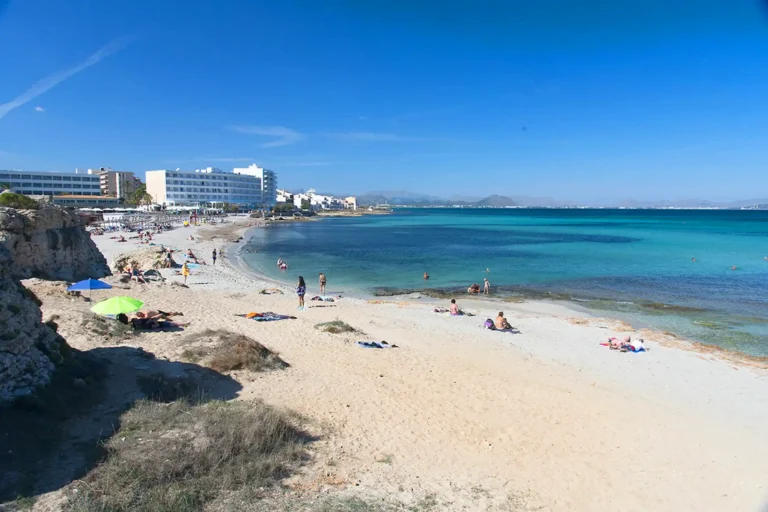
Son Serra de Marina is a small coastal settlement at the southern end of the Bay of Alcúdia, with a quiet, uncrowded beach. The Serra de Llevant and the Necropolis of Son Real are just a few kilometres away.

Colònia de Sant Pere is a quiet coastal village in the municipality of Artà with a residential character and no mass tourism. Its seafront promenade, views of Cap Pinar and proximity to the Llevant Natural Park make it an ideal base for exploring the northeast.

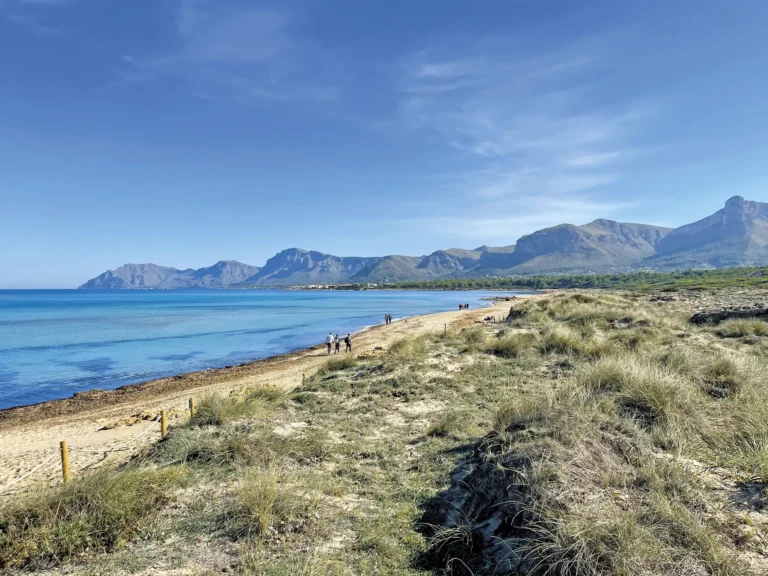
Can Picafort is the resort at the southern end of the Bay of Alcúdia, with 4 kilometres of fine sandy beach and a seafront promenade. The Alcanada Islet with the Aucanada Lighthouse can be made out from the shore on clear days.

Betlem is a quiet coastal settlement in the municipality of Artà, in northern Mallorca. No town beach, but a rocky coastline and access to the Llevant Natural Park just a few kilometres away.

Artà is a municipality in northeastern Mallorca with an inland old town and an unspoilt coastline. It is not a beach town but a gateway to the Llevant Natural Park and the wildest coves of the east coast.

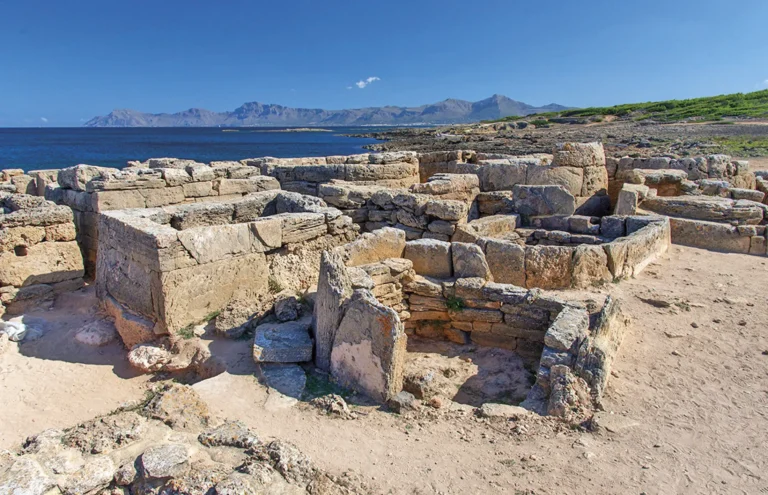
The Necropolis of Son Real is one of Mallorca’s most important archaeological sites, with 143 Talayotic tombs on the coast of the Bay of Alcúdia. It sits just metres from the sea and can be seen from our boat trips.