Panoramic aerial photograph of the islet of Alcanada with its lighthouse, the golf course and the coast of Alcúdia in the background over turquoise waters.

Cala Murta in Mallorca. Complete guide for an easy visit

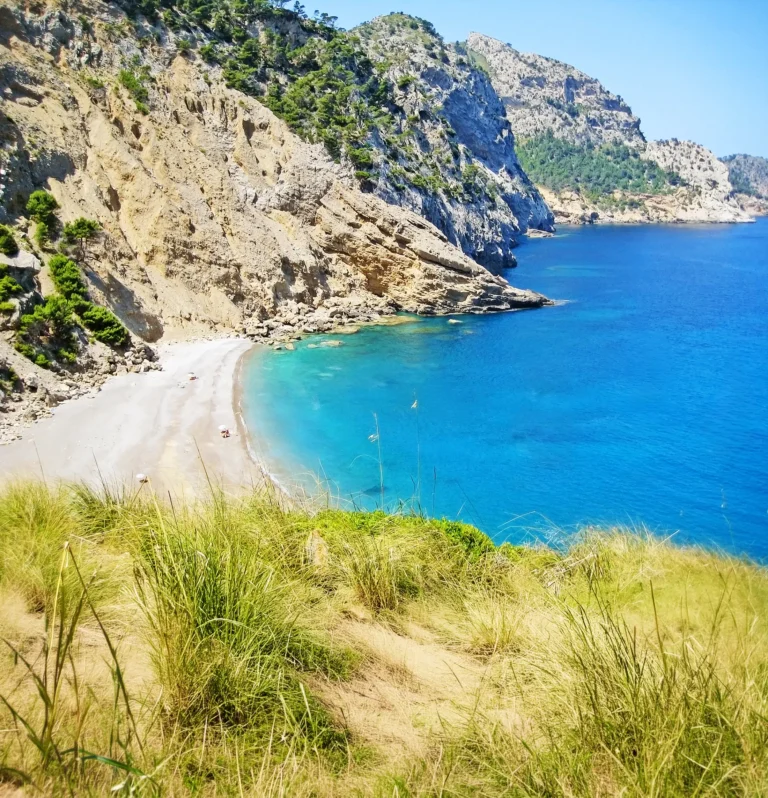
Cala Murta is a narrow, elongated cove that opens between low rocky mountains and pine forest. At the far end, there is a small beach of smooth stones and sand where the calm, shallow water shifts from bluish turquoise to light green. There are no facilities, and that is exactly what those who go there are looking for.

It is located on the Formentor peninsula and can only be reached on foot, by bike or by sea. From the bus stop on the road, it is around 20-30 minutes on foot. From the jetty at Formentor beach, around 1 hour 30 minutes. Those arriving by bike can reach it in around 45 minutes from the jetty. This access keeps visitor numbers low even in summer. For those who prefer to see it from the water before deciding whether the walk is worth it, our boat trip to Formentor sails along this coast from the Port of Alcúdia and lets you see the entrance to the cove from the sea, the perspective from which its narrow corridor between the rocky walls is best appreciated.

Where is Cala Murta?

Cala Murta is on the Formentor peninsula, in the municipality of Pollença, between the Es Colomer viewpoint and the lighthouse. The sea inlet is around 180 metres long; the beach itself is about 85 metres long and up to 25 metres wide.

How to get there

By car and on foot

From Port de Pollença, take the MA-2210 towards the Formentor lighthouse. From 15 May to 15 October, between 10:00 am and 10:00 pm, the road has traffic restrictions: access is only allowed if there are spaces available in the authorised car parks; a sign indicates this at the entrance and a barrier controls access.

The parking area for Cala Murta is next to the road. It is free but small. In our experience, in high season it fills up before 9:30 am, so it is best to arrive early or take the bus instead. From the car park, a signposted path of around 2 km descends through pine trees to the beach, with a moderate slope and some dirt-track sections at the end. The descent takes between 20 and 30 minutes. Comfortable trainers, not flip-flops.

TIB line L-334 runs between 15 May and 18 October. It connects Alcúdia and Port de Pollença with several points on the peninsula, including the Cala Murta car park. From there, you have to follow the same path on foot. It is worth checking the timetable before setting off because the frequency is limited.

Arriving by sea avoids the road, the parking and the walk. The cove offers good shelter for small boats, although the seabed drops quickly and there is posidonia close to the shore: we recommend always anchoring on sand to avoid damaging it.

From the Port of Alcúdia, our boat trip to Formentor sails along this coast and lets you see the entrance to the cove from the water. For those who want to anchor and swim here at their own pace, private boat tours allow you to include Cala Murta as a stop and combine it with Cala en Gossalba or other coves on the peninsula.

Side view of Cala Murta, with turquoise waters, a rocky seabed, Mediterranean pine forest and limestone cliffs in northern Mallorca.

What is the cove like?

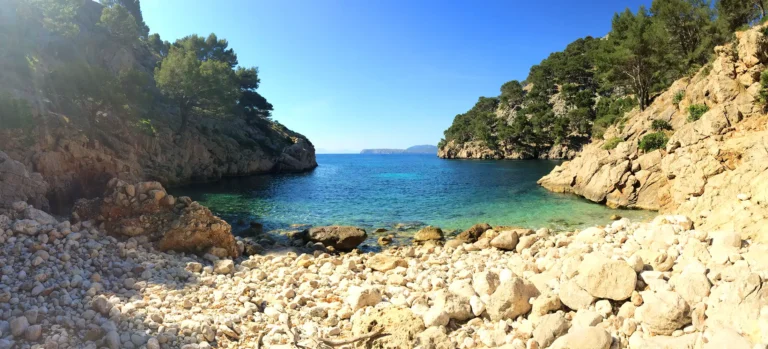
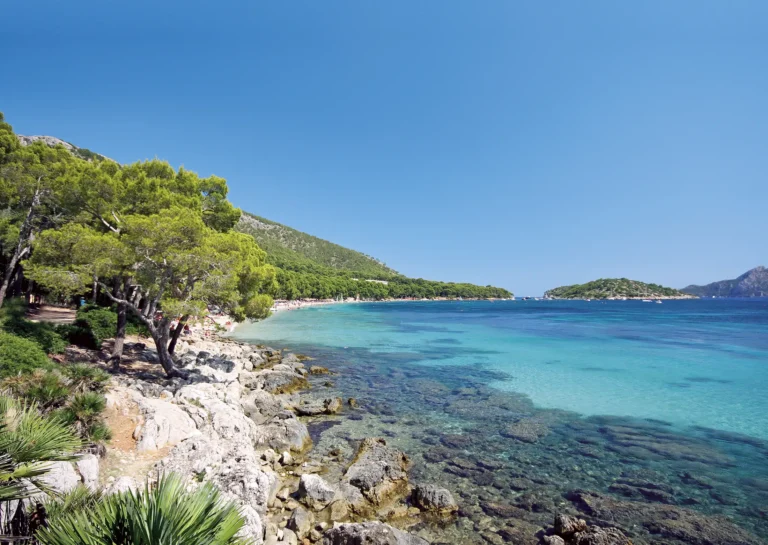
From the sea, it looks like a miniature fjord, a narrow and elongated inlet between low rocky mountains and pine trees that reach right down to the water’s edge. At the far end, there is a small beach of stones, pebbles and coarse sand, barely 85 metres long. The water is very clear. Near the shore it is bluish turquoise, but as the seabed drops, the colours shift towards the greens typical of posidonia. The entry is over pebbles and stone, so water shoes make access to the water much easier. The cliffs cut off the wind and the cove remains calm almost all year round. Early in the day, the pine trees provide some shade along the edges, while the centre of the beach stays in the sun.

How to enjoy Cala Murta

For us, snorkelling is what makes Cala Murta most worthwhile. The water is transparent and the rocky seabed with posidonia has enough marine life to keep you entertained for a good while. The best areas are along the sides, close to the rocks. Visibility is good when there is no swell, which is most of the time thanks to the cliffs.

Arriving by kayak or paddleboard also works well. The narrow shape of the inlet invites you to explore it slowly from the water, which is exactly why those arriving by boat often bring paddleboards.

We recommend going up to the Es Castellet viewpoint before or after your swim. It is only a few minutes from the end of the path and the views over the Bay of Alcúdia and the Formentor coast make the stop worthwhile. Along the way, it is common to come across wild goats and donkeys. Do not feed them. Human food can be toxic for them and ends up changing their natural behaviour.

Facilities

Cala Murta has no facilities. No beach bar, no sunbeds, no showers, no toilets, no lifeguard. The picnic tables that used to be next to the path were removed in 2021.

If you are going to spend several hours there, it is best to bring plenty of water, some food, sun protection and a mat for the pebbles. The sides of the cove have shade from pine and holm oak trees, but the centre remains in the sun. If you do not want to depend on finding a spot along the edges, a small parasol gives you more freedom. There is no supply point. Also bring a bag for your rubbish. It is a protected cove and we want it to stay that way.

The parking area next to the road is free.

Best time to enjoy Cala Murta

If you can choose, September is the best month: the water is still warm, there are clearly fewer people than in August and traffic restrictions begin to ease. October also works well. In spring, the cove is quiet and the green of the pine forest is at its best.

In July and August, visitor numbers increase, but it never reaches the saturation levels of the large beaches in the bay. The time of day makes the difference. Early in the morning or at sunset, the cove feels completely different. At midday, the centre of the beach is in direct sun, although the sides have shade from pine and holm oak trees. Days with north or easterly winds can bring some swell, although the cliffs offer quite a lot of protection.

Practical tips

Water shoes. The seabed from the shore is stony and entering without protection is uncomfortable, especially for children. It is the first thing we put in our backpack when we go to coves like this.

The paved path has a gentle slope and ends with a short dirt track of a few metres. With children, it can be done without any problem. It is not suitable for pushchairs or people with reduced mobility.

Check the traffic restrictions before setting off by car. The road sign indicates whether there are spaces available; if there are none, the barrier will not open. In that case, the shuttle bus from Port de Pollença is the most convenient alternative.

If you arrive by boat, anchor on sand and not on posidonia. The posidonia seabed in this cove is worth preserving.

Shoreline of Cala Murta with crystal-clear waters, stones and pine trees on both sides of the cove on the Formentor Peninsula, Mallorca.

Frequently asked questions

How do you get to Cala Murta?

Take the MA-2210 Formentor road to the Cala Murta car park. From there, you have to walk around 20-30 minutes along an easy path with some slope. In high season, you can also take the shuttle bus to the stop near the start of the path.
The paved path is in good condition and has a moderate slope. The final section, the last 200 metres, is a dirt track down to the beach. With children used to walking, it can be done without any problem, although it is not adapted for pushchairs or people with reduced mobility.
There is a free parking area next to the road, but it is small and fills up before 9:30 am in high season. It is best to arrive early or use the shuttle bus.
For children who already walk well and are used to uneven terrain, yes. The pebbly ground and water that gets deep quickly make it less comfortable than a sandy beach, but with water shoes and supervision it works well.
There is nothing on the beach. No beach bar, no sunbeds, no toilets, no lifeguards. The pine trees provide some shade along the edges early in the day, but the centre remains in the sun. Bring water, food, a parasol and a mat.
Yes, quite good. The water is very clear and the rocky, posidonia seabed has marine life. The best areas are along the sides of the cove, close to the rocks. Bring a mask, snorkel and water shoes.
For anyone looking for a quiet cove without crowds, yes. The shape of the inlet is unusual and the atmosphere is very different from beaches with facilities. A few minutes from the end of the path there is a viewpoint, Es Castellet, with panoramic views that are worth the stop on their own.
The beach rarely gets overcrowded from land thanks to the pedestrian access. In summer, quite a few boats anchor in front of the cove, which can make it a little less peaceful at midday. Going early or late in the day makes all the difference.
Yes. The cove offers good shelter for small boats. Anchor on sand to avoid damaging the posidonia. Arriving by boat avoids the whole walk, although once you are there, there are no facilities.
Contenidos
The Alcudia Sea Trips Blog
Ideas, guides and hidden gems to explore Mallorca’s northern coast.
Cala en Gossalba with crystal-clear waters and rocky cliffs on the Formentor peninsula
Cala en Gossalba in Mallorca. Practical guide and tips for visiting

Cala en Gossalba is one of those coves that does not appear in travel brochures. It is hidden on the Formentor peninsula, between cliffs, pine trees and mountain slopes that drop straight down to the sea, and it can only be reached by walking for around 30 minutes along a steep path or by arriving from the sea. There is no sand, no beach bar, no lifeguard. What it does
Read more »
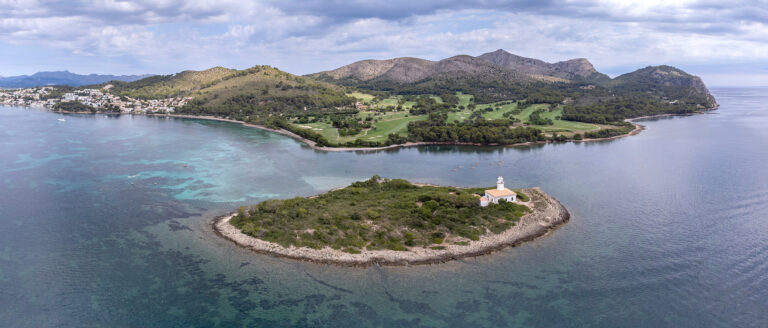
Panoramic aerial photograph of the islet of Alcanada with its lighthouse, the golf course and the coast of Alcúdia in the background over turquoise waters.
Alcanada Beach, Mallorca: the quietest beach in the Bay of Alcúdia

Alcanada Beach is not the best-known beach in northern Mallorca, and that is exactly what makes it so interesting. It is located three kilometres from the port of Alcúdia, facing a small islet with its own lighthouse, with pine trees reaching almost down to the shore and offering shade when many other beaches in the area are in full sun. It is a popular beach among local residents and families
Read more »
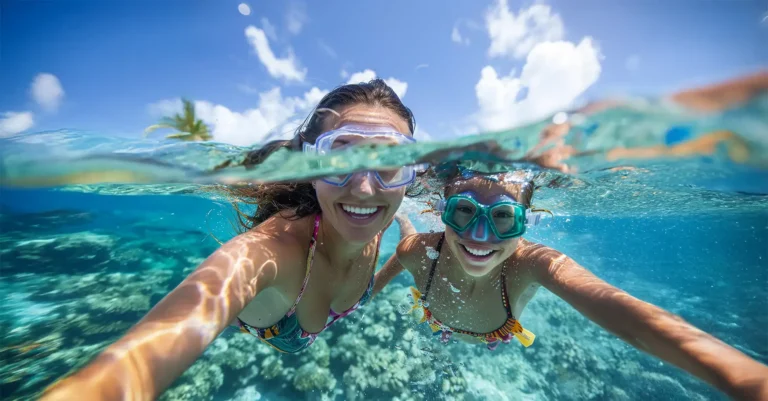
Snorkeling on a Private Boat Trip in Mallorca
Snorkeling in Mallorca: best areas and boat trips

Snorkeling in Mallorca: Best Spots and Coves Mallorca is one of the top Mediterranean destinations for snorkeling, thanks to its crystal-clear waters, rich marine life, and the wide variety of coves and sea caves that surround the island. From easily accessible coastal spots to more remote, unspoiled locations, snorkeling in Mallorca offers a unique experience for both beginners and ocean lovers alike. Although snorkeling can be enjoyed from many beaches,

Read more »