Aucanada Lighthouse Mallorca: History, How to Get There and Views from the Boat
The Aucanada Lighthouse has been in service since 1861 on the Alcanada Islet, 150 metres from Alcanada beach. Surrounded by posidonia meadows and with views over the bay, it is one of the most recognisable landmarks in northern Mallorca.
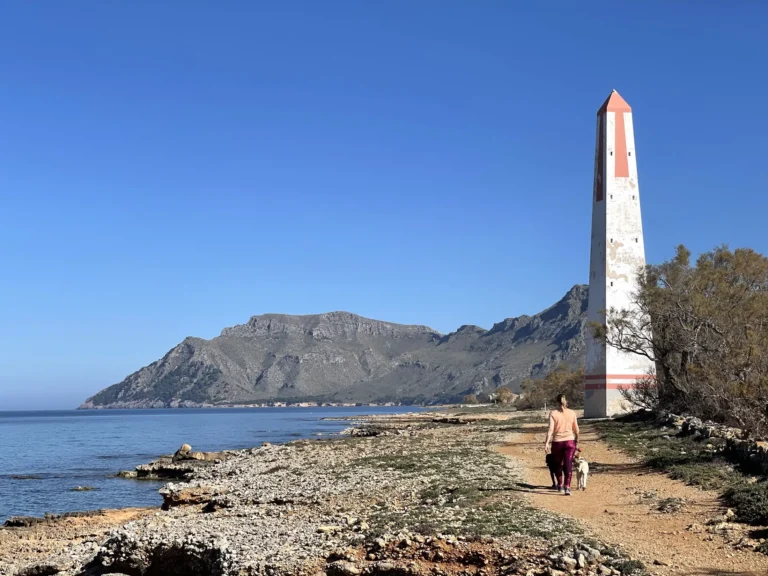
The Aucanada Lighthouse stands on a small islet about 150 m off the coast of Alcanada, in the Bay of Alcúdia. This lighthouse, dating from 1861, is still in service and, although you cannot go inside, it is one of the most recognisable landmarks in northern Mallorca. From the shore you can clearly make out its white silhouette between the blue of the Mediterranean and the pine woodland covering the island, but it is only when you approach by sea that you truly appreciate the size of the islet and the position of the lighthouse on the rocks.
To see it up close you can swim or kayak over from Alcanada beach, or admire it during a boat trip. It does not appear in as many guidebooks as other lighthouses in Mallorca, but for Alcudia Sea Trips it is a very familiar sight: our routes skirt it before continuing towards Cap Pinar or Formentor.
Where it is
The lighthouse sits on the Aucanada islet (Illot d'Aucanada), opposite the beach of the same name in the municipality of Alcúdia. From land it appears only as a silhouette; to appreciate its details you need to approach by sea.
| Port d'Alcúdia | ~3.5 km by road | ~0.8 nautical miles by sea |
| Port de Pollença | ~16 km by road | ~4.3 nautical miles by sea |
| Ca'n Picafort | ~18 km by road | ~5 nautical miles by sea |
The road distances refer to the access point at Alcanada beach, since the islet has no road of its own.
Coordinates: 39°50'07" N, 3°10'15" E (approx.)
Quick facts
| Official name | Alcanada / Aucanada Lighthouse |
| Municipality | Alcúdia |
| Year built | 1861 (entered service on 15 May 1861) |
| Tower height | 15 m (masonry tower) |
| Focal height | 25 m above sea level |
| Nominal range | 11 nautical miles |
| Light characteristic | Isolated flashes every 5 s (white light) |
| Daytime appearance | White cylindrical tower with a low attached dwelling |
| Status | Operational (automated, solar-powered since the 1990s) |
| Access | Islet reachable by swimming or kayak; lighthouse interior closed to the public |
| Open to visitors inside | No (you can only walk around the outside of the dwelling) |
| Heritage protection | ANEI + SCI (Site of Community Importance), Natura 2000 network (ES5310005 Badies de Pollença i Alcúdia) |
Is this lighthouse worth visiting?
Yes, especially if you want to see one of Mallorca's few operational lighthouses on an islet and enjoy uninterrupted views across the Bay of Alcúdia. It is also an unusual outing for anyone who wants to swim or paddle to a small islet, walk around it and see the lighthouse up close.
From our boat trips it looks quite different. Skirting the islet gives you a much better sense of the relationship between the tower, the rocks and the bay, something that is harder to grasp from the beach.
It is not suitable if you expect to enter the tower or climb to the lantern, as the interior is closed to the public. It is also unsuitable if you would rather not cross to a rocky islet: to set foot on it, you must swim the 150 m channel when the sea is calm or arrive by private boat.
History and context
The Aucanada Lighthouse was one of the first modern lighthouses on the island. It was designed by the engineer Emili Pou, responsible for several lighthouses in the Balearics. It was inaugurated on 15 May 1861 with a fixed sixth-order light fuelled by oil. Two years later the building's beams were replaced, and in 1917 rotating panels were installed, converting the fixed light into flashes.
In 1960 the lantern and optics were replaced with an automated battery-powered system. In the 1990s solar panels were added, removing the need for permanent staff.
Over its history, the lighthouse keepers performed acts of heroism: in 1916 they were decorated for rescuing two crew members from a shipwrecked vessel.
The islet was inhabited by the keepers' families until the late 20th century. Today the dwelling is closed, but the island is still maintained so the lighthouse can operate. Around the islet lies a meadow of Posidonia oceanica, a habitat protected by law.
Restrictions and permits
Access to the islet: There are no timetables or permits required to approach by swimming or kayak; however, it is only advisable on calm days to avoid currents and swell. The crossing is about 150 m but the depth increases quickly. There is no jetty or beach area on the islet, so you land on rocks.
Anchoring: Anchor over sand, never over the posidonia meadows. The island has no mooring buoys.
Drones: The proximity to the Alcanada residential area and the protected zone restrict flying. Authorisation from AESA is required.
Guided visits or permits: No interior visits are organised and there are no opening hours; any organised visit must request permission from the Port Authority.
How to see or visit it
From land
The best approach is from Alcanada beach, where you can park along the road and walk a few metres to the shore. To get there from Port d'Alcúdia, follow the Ma-3460 towards the commercial port and continue to the end; the road runs along the coast.
To set foot on the island you need to cross by swimming, on a SUP board or by kayak. The water is shallow near the shore, but there are rocky patches as you go further out. Bring water shoes. The islet is uninhabited and has no facilities: bring water, suitable footwear and leave no litter.
From the sea
The scale of the islet is easiest to appreciate from the sea. The white tower stands out against the pines and rocks, with the Alcanada coastline in the background. This gives you a more complete view than you get from the beach.
For anyone who wants to see it without swimming or kayaking across, the Glass Bottom Boat departs from the Port of Alcúdia, passes right by the Aucanada Lighthouse and lets you observe the islet from different angles before continuing towards Cap Pinar and Formentor.
The Boat Trip to Formentor also skirts the islet and the lighthouse on its route towards the Bay of Pollença.
Our Private Boat Trips allow you to approach the islet and anchor nearby, always keeping clear of the posidonia beds.
Private boat: Sailing in the waters of the bay is straightforward in good weather. The average depth is 5 to 8 m, with sandy bottoms mixed with posidonia. Anchor over sand.
What it looks like from the sea
As you approach by boat, the lighthouse gradually becomes more prominent. It is easy to spot from the beach, but sailing alongside the islet gives you a much better view of the tower, the attached dwelling, the pine woodland and the rocks surrounding the island.
At sunrise, the light falls on the south face of the lighthouse. At sunset, the sun goes down over the Tramuntana Mountains and bathes the tower in warm tones. As the boat pulls away, the view changes again: the lighthouse recedes against the expanse of the Bay of Alcúdia, making it easier to understand why this was a strategic position for guiding ships towards the port.
Shag cormorants often rest on the islet's rocks; salema and saddled seabream can be seen beneath the keel when passing over posidonia.
To photograph it from our catamaran, a 50-70 mm focal length is enough to frame the whole tower. On calm days, the surface of the sea reflects the lighthouse.
Photography
From land
The best shot is from Alcanada beach at sunset, when the sun goes down over the bay and bathes the lighthouse in warm light. Early in the morning, the side lighting brings out the texture of the tower and the rocks.
From the sea
From the boat, you photograph the lighthouse practically at sea level and the islet takes on far more prominence. The most recognisable framing shows the tower at the top, with the rocks and the sea in the foreground. From our catamaran, a medium focal length of 50-70 mm is enough.
Drone
Drone flights are restricted in the Bay of Alcúdia. Check the AESA regulations before flying.
When to go
Spring and autumn are the best seasons: the sea is calmer, there are fewer swimmers and it is not so hot for crossing to the islet. In summer the crossing is possible, but it is worth setting out early to beat the heat and before the parking fills up.
The best time to see it from land is at sunrise or sunset. At midday the sun is high and the photos are less interesting.
Avoid days with northerly or easterly winds, which can generate swell in the channel.
Practical tips
Water shoes and sturdy footwear for the islet: the rocks on the seabed and along the shore can be slippery.
There is no shade on the islet or the beach; bring a hat, sunscreen and water.
Do not anchor over posidonia.
If you swim across, take a safety buoy.
Leave no litter: this is a protected natural area.
Frequently asked questions
How do you get to the Aucanada islet?
By swimming, SUP board, kayak or boat. The crossing from the beach is about 150 m and should only be done on calm days. For anyone who prefers not to cross, the lighthouse is clearly visible from the beach or from our boat trips.
Can you go inside the lighthouse?
No. The interior is closed and automated. You can only walk around the outside of the dwelling.
Is it safe to swim to the island?
Yes, as long as the sea is calm and you have a basic level of fitness. Take a marker buoy and do not go alone. With small children it is better to cross by kayak.
Can you go with children?
Yes, but only if they are strong swimmers or go by kayak with adults. The islet has no facilities or shade.
Which of our boat trips pass the lighthouse?
The Glass Bottom Boat is the trip that offers views from the most angles, as it skirts the islet before continuing its route. The Boat Trip to Formentor also passes the lighthouse on its way to the Bay of Pollença. Some Catamaran Trips Around Mallorca departures include it depending on the day's itinerary.
When is the best time to visit?
In spring or autumn, when the sea is calm and there are fewer visitors. Early in the morning or at sunset the light is better and the parking is less crowded.
Is there parking nearby?
Yes, along the road next to Alcanada beach. Parking is free but very limited in summer; arrive before 10:00.
Can you fly a drone?
Not without authorisation from AESA. The Bay of Alcúdia and the proximity to the residential area restrict flying.
Is it worth crossing to the island?
Yes, for anyone who wants to reach an uninhabited islet and walk around the lighthouse. To see and photograph it without crossing, the beach offers a good view and our boat trips let you observe it more closely from the sea.

Artà is a municipality in northeastern Mallorca with an inland old town and an unspoilt coastline. It is not a beach town but a gateway to the Llevant Natural Park and the wildest coves of the east coast.

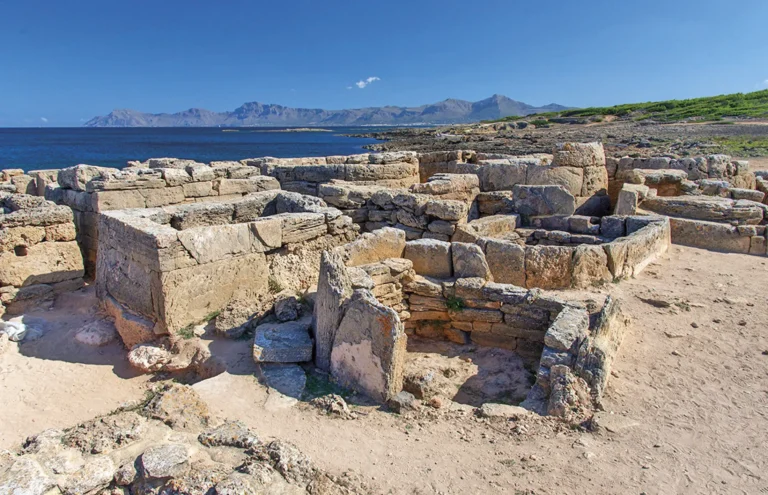
The Necropolis of Son Real is one of Mallorca’s most important archaeological sites, with 143 Talayotic tombs on the coast of the Bay of Alcúdia. It sits just metres from the sea and can be seen from our boat trips.

The Llevant Natural Park protects the most unspoilt stretch of Mallorca’s northeastern coast, with cliffs over 200 metres high, sea caves and coves with no road access. It is the destination of our Coves and Caves boat trip.

150 metres from Alcanada beach lies a 4-hectare islet covered in pines and crowned by the Aucanada Lighthouse, in service since 1861. The water around it is among the clearest in the Bay of Alcúdia, thanks to the posidonia meadows.

The Port of Alcúdia is the departure point for all our boat trips and also a destination in its own right: seafront promenade, restaurants and direct access to the beach. In July and August the parking fills up before 10:00.

The Bay of Pollença is the most nautical bay in northern Mallorca. Sheltered by Cap Pinar and the Formentor Peninsula, it has calm waters almost all year round and unspoilt coves reachable only from the sea or on foot.