Alcanada Beach, Mallorca: the quietest beach in the Bay of Alcúdia
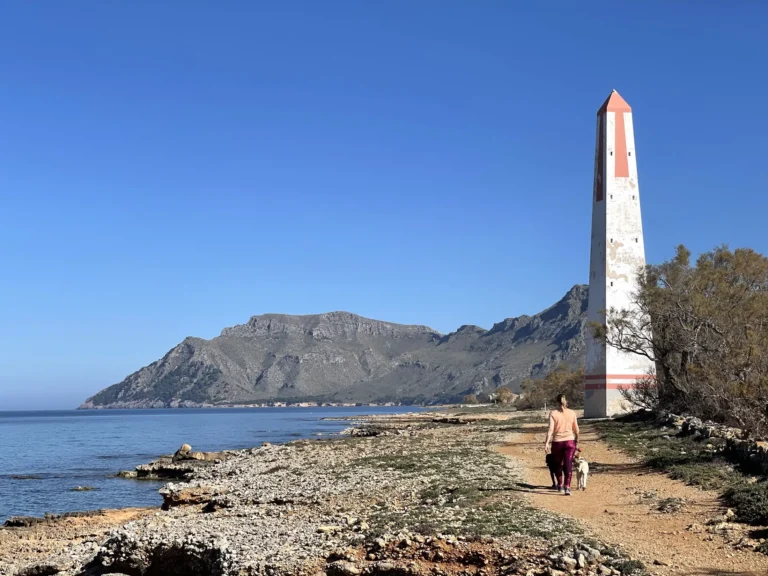
The lighthouse islet, around 150 metres from the shore, is the feature that most defines this beach. On calm sea days, you can reach it by swimming or by kayak. Seen from the sea, the perspective changes completely: most of our boat trips pass through this area, and the one that makes the most of this stretch is the glass bottom boat, which explores the seabed of the bay in front of Alcanada without the need for snorkelling equipment and includes a swimming stop opposite the beach.
Where is Alcanada Beach?
How to get there
By car
By bus
On foot or by bicycle
There is a pedestrian and cycle path that runs along the entire Alcúdia coastline to Alcanada. It is approximately 3 km from the port, flat and right by the sea.
By boat
Alcanada has a sheltered anchorage opposite the lighthouse islet. Boats can anchor nearby, always outside the posidonia seagrass meadows.
All our boat trips pass by Alcanada Beach and the lighthouse islet, except for the Coves and Caves trip, which heads in the opposite direction towards the northeast. The Sailing Catamaran, the Formentor trip, the glass bottom boat, the dolphin watching trip and the private tours all cover this stretch. When conditions allow, we make a swimming stop opposite the beach. The islet protects it from the embat sea breeze and the swell, so the water is usually calm even when there is already some movement at other beaches in the bay.
What is the beach like?
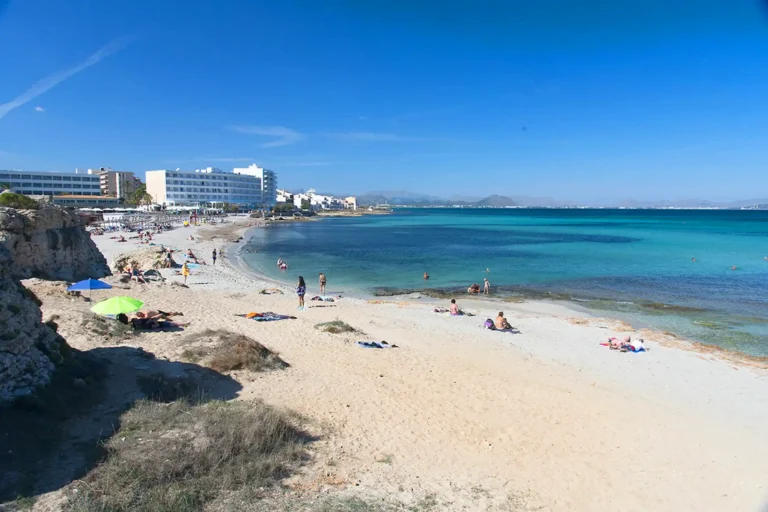
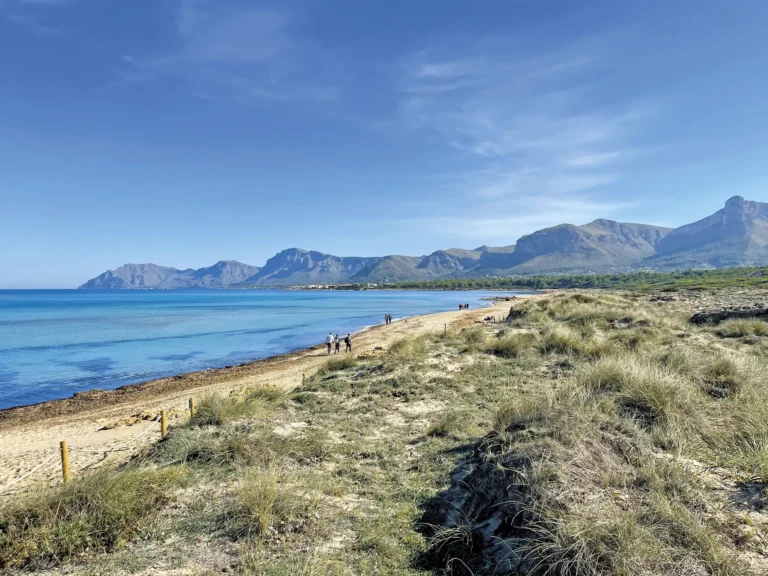
The beach is around 700 metres long and about 20 metres wide. The ground is made up of pebbles and sand, with dry posidonia seagrass in some areas. The seabed is sandy and shallow close to the shore. A few metres out, there are rocky areas, so we recommend wearing water shoes, especially if you are visiting with children.
A line of pine trees and tamarisks runs along the beach, providing natural shade, something that is very welcome in summer. Near the entrance, there are picnic tables and benches.
The islet with the lighthouse is around 150 metres from the shore. When the sea is calm, you can swim across or go by kayak. From land it looks close, but the distance and the change in seabed conditions should be taken into account.
The combination of natural shade, calm water and a relaxed atmosphere is what makes many locals prefer it over other busier beaches in the bay.
How to enjoy Alcanada Beach
Swimming is the main activity here. The water is shallow and calm, ideal for an easy swim and for children to play close to the shore.
For snorkelling, the most interesting area is around the islet and the rocks that surround it, especially early in the morning, when the sea is usually calmer. The water is clear, and you can often see fish, sea urchins and starfish. Many visitors arrive by kayak from the port to the lighthouse and explore the islet from the water.
Crossing to the islet on foot is possible when the sea is very calm and the tide allows it. Wear water shoes and avoid doing it when there is any swell.
There is also a dog-friendly area at the far end of the beach.
Facilities and where to eat in Alcanada
Alcanada Beach has a fairly natural atmosphere, so facilities are limited. There are no sunbeds, showers, public toilets or lifeguard service. Free parking is available along the road and, near the entrance, several pine trees provide natural shade next to a few picnic tables.
For food, the nearest restaurants are in the residential area of Alcanada, just a few minutes’ walk away. Some of the best known are La Terraza, Alcanada 35 Restaurante and the restaurant at Club de Golf Alcanada. If you are planning to spend several hours at the beach, we recommend bringing water, some food and sun protection, as the beach keeps a very natural character and facilities are minimal.
When is the best time to enjoy Alcanada Beach?
Although Alcanada never gets as crowded as other beaches in the Bay of Alcúdia, during weekends in July and August it attracts quite a few residents and visitors looking for shade and a peaceful atmosphere. On weekdays, however, it usually remains much quieter.
For us, the best times are early in the morning and at sunset, when the light is softer and the lighthouse islet offers some of the best coastal views for taking photos.
If you can choose the time of year, we recommend visiting in spring or early autumn: the water is still a good temperature, there are fewer people and the atmosphere is much more relaxed.
Tips for enjoying Alcanada Beach
We recommend wearing water shoes, as the pebbles and posidonia seagrass can make getting into the water uncomfortable, especially for children or anyone with sensitive feet.
If you want to reach the lighthouse islet, it is important to do so only when the sea is completely calm. From the shore, it looks like a short distance, but the depth and currents can change depending on sea conditions. When in doubt, it is better to enjoy it from the coast or by kayak.
We also recommend respecting the posidonia seagrass meadows when swimming or anchoring boats. They are essential for maintaining the clarity and quality of the water throughout the bay.
Finally, it is a good idea to check public transport timetables in advance. Bus frequency to Alcanada is limited, especially outside the main season, so it is worth checking the time of the last return bus before you go.
Frequently asked questions
How do you get there and where can you park?
Is the beach sandy or rocky?
It is made up of pebbles and sand, with some areas of posidonia seagrass and dry posidonia. It is not a completely fine sandy beach. Water shoes are recommended for getting into the sea.
Is there natural shade and are there any facilities?
Is it suitable for children?
Yes. The slope is very gentle and the water is calm and shallow. With water shoes and supervision, it is a comfortable beach for younger children.
Can you go snorkelling and kayaking?
Is it worth visiting the lighthouse islet?
When is it less crowded?
Is there a dog-friendly area?
How does it compare with other beaches in Alcúdia?

Cala Murta is a peaceful, wild cove on the Formentor peninsula, with crystal-clear water, a rocky seabed and access on foot, by bike or by sea. We explain how to get there, when to visit and what to keep in mind to enjoy it without complications.

Formentor beach is one of the most beautiful images in northern Mallorca: light sand, turquoise waters, pine trees right down to the shore and the Serra de Tramuntana in the background. In this guide, we explain how to get there without dealing with traffic, when to go to avoid crowds and what to expect from one of the island’s most famous beaches.

Coll Baix beach lies at the foot of a cliff, on the La Victòria peninsula, just a few kilometres from Alcúdia. Part of its appeal lies precisely in its isolation. To get there, you have to leave the car at the Cap des Pinar recreational area and continue on foot for around 45 minutes. The route begins on a well-maintained dirt track and ends on a path with a rocky

Cala en Gossalba is one of those coves that does not appear in travel brochures. It is hidden on the Formentor peninsula, between cliffs, pine trees and mountain slopes that drop straight down to the sea, and it can only be reached by walking for around 30 minutes along a steep path or by arriving from the sea. There is no sand, no beach bar, no lifeguard. What it does

Snorkeling in Mallorca: Best Spots and Coves Mallorca is one of the top Mediterranean destinations for snorkeling, thanks to its crystal-clear waters, rich marine life, and the wide variety of coves and sea caves that surround the island. From easily accessible coastal spots to more remote, unspoiled locations, snorkeling in Mallorca offers a unique experience for both beginners and ocean lovers alike. Although snorkeling can be enjoyed from many beaches,